

Information for
Helpful Links
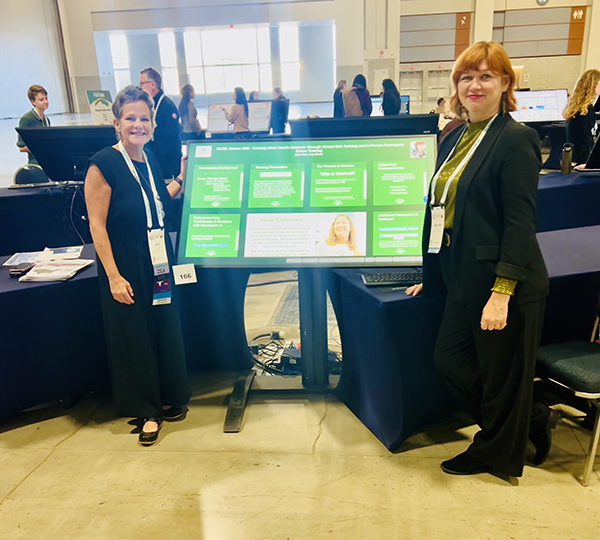
Speech pathologist Julie Hart, MS, CCC-SLP, director of The Aphasia Center at Russell Sage College, and Community Health Nursing Instructor Amy Dixon, MSN, RN, presented “Training Allied Health Students Through Virtual SCA and In-Person Participant-Driven Training” at the American Speech-Language-Hearing Association (ASHA) conference in Washington, D.C., on November 22. (SCA is an acronym for Supported Conversation for Adults with Aphasia — an evidence-based method that helps people with aphasia and their communication partners have clearer, more equal conversations using gestures, drawing, and other strategies.)
Their presentation highlighted a collaboration between the Aphasia Center and Russell Sage’s nursing department to address overlapping concerns: People with aphasia and other communication challenges report frustration that medical providers do not listen to them or speak only with their caregivers, while nursing students report uncertainty about how to communicate in complex or unfamiliar clinical situations.
“Therapeutic and professional communication in nursing is especially important to continually develop throughout our curriculum with our nursing students,” said Dixon. “Any breakdown in communication can be harmful for patients and create unsafe outcomes in clinical practice.”
Since fall 2024, future nurses in her Community Health class complete SCA training, then spend several hours over the semester participating in the Aphasia Center’s conversation groups, where they receive guidance from speech-language professionals and feedback from people with aphasia as to what effective communication looks like from their point of view.
Hart and Dixon shared promising results from their collaboration: Adults with aphasia express positive changes in their identity and agency as a result of their involvement, and students describe patient-centered communication skills that they carry into clinical practice.
“I think nurses will help people like us that are frustrated,” said one participant with aphasia. “I know I am talking slower than I’ve ever done before, but I really enjoy the compassion and the understanding of nurses.”
“This taught me to slow down and pay attention, to give room to people with communication difficulties to articulate for themselves,” said one of the student nurses. One student reported using what they learned from the Aphasia Center during clinical rotations, and a new nurse said that the communication skills they learned transcend specialties and patient populations and make them a better nurse.
“We’re lucky to be at a college that values health sciences, pre-health training, and community service,” said Hart. She noted that while the ASHA presentation focused on the Aphasia Center’s work with Sage’s nursing degree programs, the center — an arm of Sage’s Speech-Language Pathology degree program — partners with all of the college’s health sciences degree programs and even nonhealth disciplines.
The nursing collaboration has inspired new ideas to continually improve the center’s work with future health professionals and outcomes for patients with communication challenges, Hart continued. These include self-evaluation checklists for students and participants, a possible home-visit program, participant-made SCA demonstration videos, and more systematic data collection to measure impact.