

Information for
Helpful Links
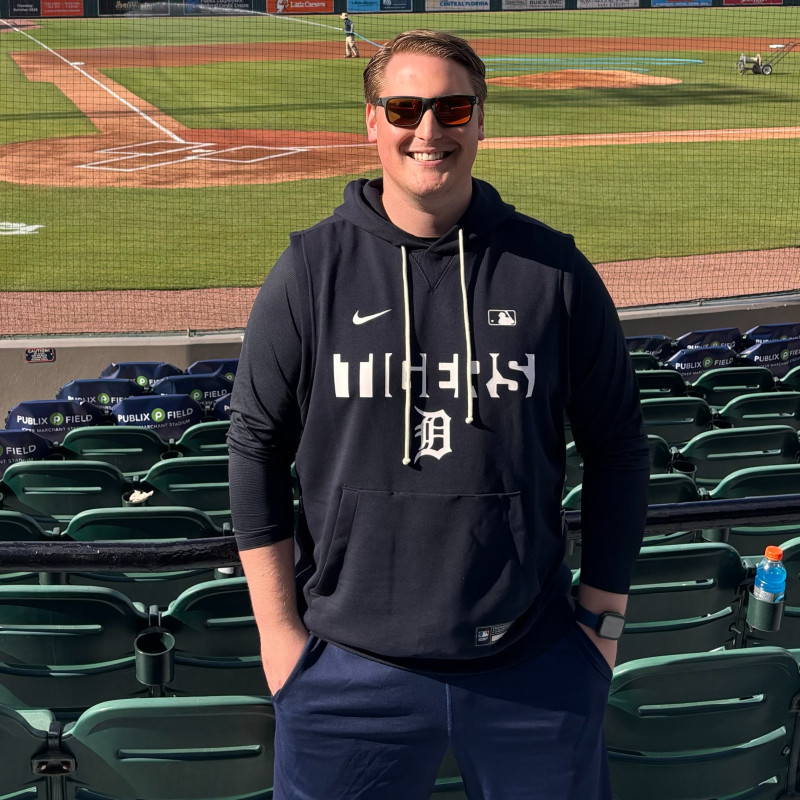
When Arthur Wayne Baker Jr., DPT, entered Russell Sage College’s Doctor of Physical Therapy program, the former student-athlete, collegiate baseball coach, and scout wasn’t just pursuing a degree. He was taking a deliberate step toward his ultimate goal of becoming a Sports Physical Therapist focused on the care of athletes who rely heavily on their arms and shoulders.
His ambition has taken him from Sage to a Sports PT Residency at Midwest Orthopaedics at RUSH in Chicago, to his current role as the Upper Extremity Fellow at Memorial Hermann Rockets Sports Medicine Institute in Houston, where he worked alongside the University of Houston’s Division I baseball team and now with the Detroit Tigers Major/Minor League baseball team.
In the following Q&A, Baker shares a glimpse into the Tigers’ spring training, how Russell Sage College prepared him to meet his goal, and his advice for the next generation of sports PTs.
You were a PT with the Detroit Tigers at their spring training camp! What was a day like when you were working with the team?
For starters, no day is the same, so I’ll do my best! The day starts with a Sports Performance and Rehab meeting, then the training room opens at 7:30 a.m. Next is early rehab and treatments with players, pre-throw stretch, and player prep for the day. There is usually a team meeting with players and staff followed by a team rehab stretch group outside, assisting players with interval throwing and hitting programs, watching rehab bullpens, and getting ready for intersquad scrimmages or spring training games.
During games, PTs are performing rehab with players not in the game and on call for any in-game emergency situations that may arise. Every day is different based on game schedule needs and the number of injured players.
Throughout all of this, we are consistently communicating with coaches, players, and other staff to determine player availability for the game and return-to-play timelines. I have had the incredible opportunity to work under the guidance of Major League Rehab Coordinator Duncan Evans, PT, DPT, SCS every day. My experience working with the Detroit Tigers sports medicine team showed me an example of the teamwork and professionalism needed to have success in the ever-changing environment that is professional baseball.
Please share a few highlights from your work with the University of Houston’s baseball team as well.
Working with an excellent interdisciplinary team of athletic trainers, nutritionists, strength and conditioning staff, team physicians, and other sports medicine personnel was a highlight. I specifically had the opportunity to work alongside Lance Perkins, the university’s associate director of sports medicine for baseball, in developing players’ plans and learning what it takes to be successful in a high-performing athletic training room as a PT at the Division I level.
Another highlight was being able to work with post-operative cases and see the athletes’ care through its entirety. Last but not least, one of the biggest highlights was the athletes. Inherently, you are there to help them with their PT, but being able to develop rapport and play a small part in their return from injury is very special.
How did Russell Sage prepare you for these high-level opportunities?
I believe good things come to those who can identify and seek out opportunity. I was fortunate to develop relationships with professors who taught the subjects that serve as critical building blocks when advancing to post-doctoral residency and fellowship training.
Sage provided me the opportunity to attend several local and national conferences that set the stage for networking, advanced education, and lifelong friendships. Sage also prepared me for the adversity and challenges that come with pursuing a career in sports physical therapy. The pursuit of such goals typically comes with its fair share of critics and those who will doubt your ambition. The community and support system I built at Sage was more impactful in the achievement of these goals than my peers and mentors likely know.
Your fellowship ends in July. What is your next goal?
The goal following my fellowship will be to get a full-time job working as a PT in professional baseball!
What advice would you give to high school students who are exploring career paths in athletics? What should they be doing now to follow in your footsteps?
I would say gain experience, exposure, and think outside the box. For me, having a prior career as a collegiate baseball coach and scout provided a different perspective and differentiator when it came to applying to residency and fellowship programs and ultimately jobs. This experience can start as early as an internship or shadowing. You just have to reach out, and you will be surprised where that can take you! You can never start developing a network too early. Building professional relationships with individuals you admire and would like to learn from is one of the most valuable pieces of advice I have received in my professional journey.
Is there anything you would like to add?
If you have a strong “why” and passion for pursuing a career as a sports physical therapist, you can do it! I think the purity of following your passion will take you much farther than indecision and provide you with the focus necessary to overcome any obstacle or challenge that you may face along the way. I believe being able to be stubborn about your goals but flexible with the methods and paths you take to get there is essential throughout the journey. There is no one-size-fits-all path to succeed as a physical therapist in sports, and everyone’s unique journey filled with varied experiences truly makes working in athletics so unique.
It’s worth noting that the days and hours are long and can be challenging, but you have to remind yourself this is a job you get to do, not have to do. And when you find that sweet spot, it truly is a pleasure coming to work every day.