

Information for
Helpful Links
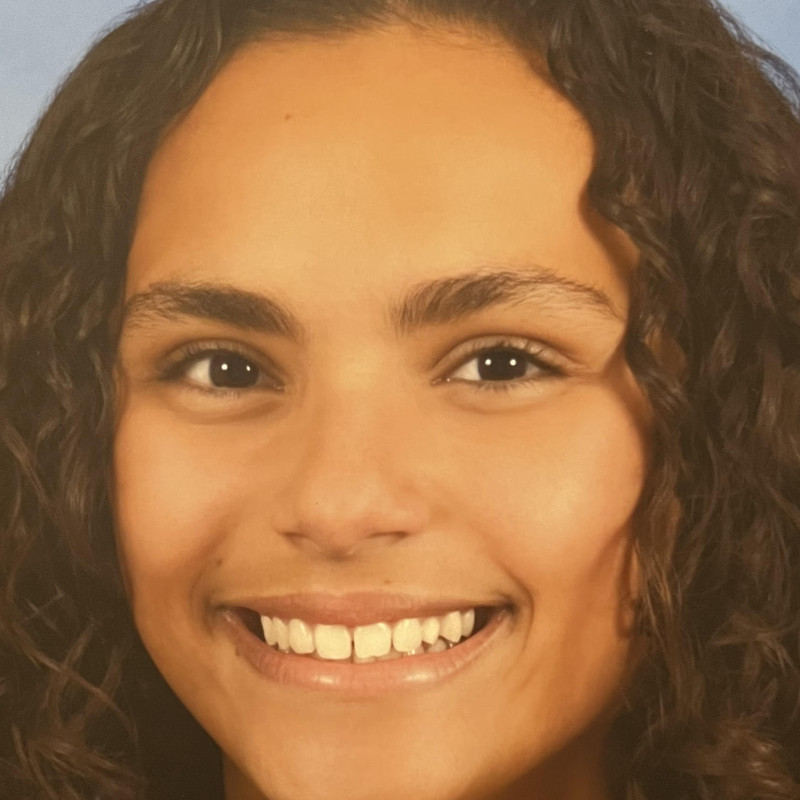
Isabella Sepulveda ’29 found her way to speech-language pathology after a social media moment that showed her the impact a speech therapist can have. At Russell Sage College, she’s already getting hands-on experience, using the latest technology, and learning just how many ways speech-language pathologists can change lives.
What drew you to speech-language pathology, and to Russell Sage College?
I was a nursing major at a community college, and I wanted a change.
I have a family member who went to college for speech therapy, but before I had spoken to her a little deeper about it, I was scrolling on social media, and I saw a video of a speech therapist working with a little kid, and the way that they were interacting sparked my interest.
And I heard Russell Sage was going to take on Saint Rose’s program, with their instructors. I decided not to do nursing anymore. I decided I’ll give this a shot.
What appealed to you when you were watching the interaction between the speech therapist and the child?
What stood out to me was the energy that she brought to the session with this kid, and the effect that it had on him. The way she was engaging him to learn and apply these skills to his daily life showed me there are more ways to help people, and to bring fun to communication therapy, than I thought there were.
How was your transfer experience? Did that go smoothly?
It really did, and honestly, I was surprised by that. When I had applied to other colleges to be a transfer student, it was a difficult process. For Russell Sage, I spoke to pretty much the same people every time I called. If there was ever an issue, it was resolved via phone call or email. Responses were always quick. Sage took a lot of my credits from community college, which I am extremely grateful for, because it cut a lot of time out of my degree. It was a very smooth transition.
What have you enjoyed about the speech-language pathology program so far?
Definitely the early hands-on experience! I heard that that doesn’t happen very often, so the fact that Sage was able to provide that to first-year students was very eye-opening, and it gave me a better idea of what I want to do, and if this is actually what I’m looking for as a career.
Getting to work with the people at the Aphasia Center was also a very, very amazing experience.
Tell me more about your experiences at the Aphasia Center.
When I go in for certain groups to get my hours and my experience in, there’ll be other majors in the group with me, and I get to work with graduate speech students from other colleges who are obtaining their master’s degrees. I get to work with Julie, who is the speech therapist. She’s amazing to work with, super awesome on constructive criticism, I always learn something from her.
I heard that you also get to use a lot of technology early in the program. Have you had that yet?
That also happened within the first semester. In Professor DeBonis’ class, we used different hearing aids and learned how they work, and he brought in equipment used for hearing testing.
And in Professor Pickering’s class, it was super cool. We used voice analysis software to figure out our vocal frequencies.
What would you like to do as a speech therapist?
I’m still figuring it out. I’m very open to working with kids. I would love to utilize my master’s degree — when I finish that — to open up my own clinic. That would be super-awesome.
Is there anything that you would like to add?
I love the experience I’ve had so far. Professor Pickering and Professor DeBonis have been amazing instructors. That’s one of the things that stood out for me when I first started the program. I never really had teachers or instructors care for my education as much as they did. I really felt it, if that makes any sense.