

Information for
Helpful Links
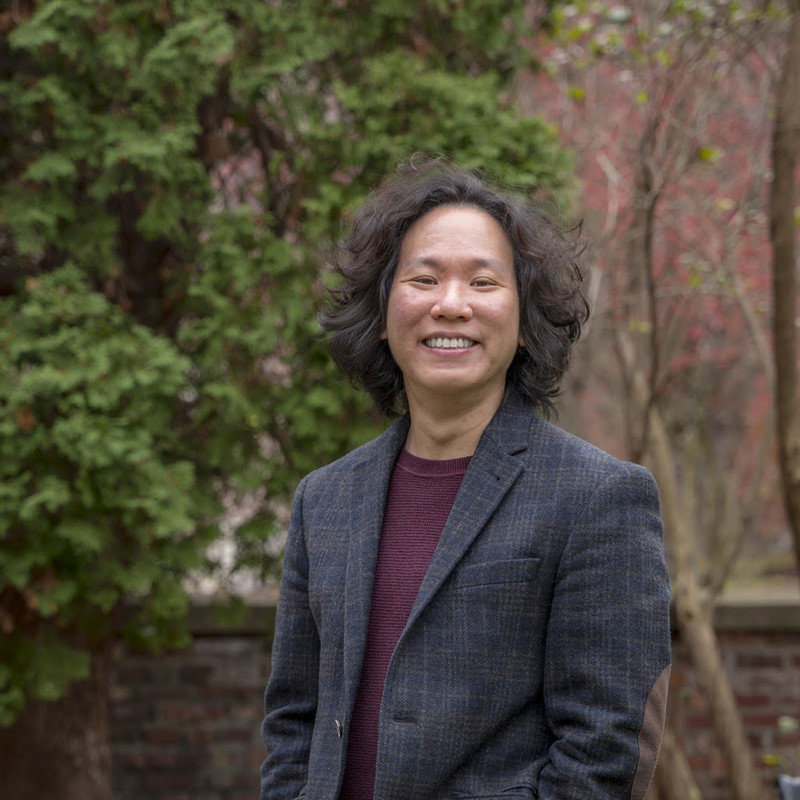
Jae Kyun Kim, Ph.D., is an Assistant Professor of Sociology. Before joining Russell Sage, he taught at Davidson College and held a postdoctoral appointment at the University of Southern California. He is an engaged teacher, a historical sociologist, and a critical theorist. He enjoys working with students in and beyond the classroom, wrestling with scholarly puzzles that have animated his work for more than a decade, and using sociology to question the world as it has been made, confront what it excludes, and imagine how social life might be otherwise.
For him, teaching is where sociology becomes a shared practice. He likes learning what students care about and helping them turn big, sometimes messy questions into focused sociological ones. In the classroom, he connects sociological concepts to everyday life and makes difficult intellectual work manageable—without pretending that it is easy. His goal is for students to leave with sharper questions, greater confidence, and the sense that sociology is something they can actively do—not just read about. Beyond teaching core courses, he enjoys designing new ones around the questions, technologies, and social changes that students are already trying to understand.
His research begins with a broad puzzle: How can antiblackness shape what counts as human, modern, and socially possible—even beyond the Atlantic world? His work approaches antiblackness not simply as one form of prejudice or inequality, but as a generative force that has helped organize modern ideas of civilization, reason, development, and social order. Drawing on social theory and comparative-historical research, he studies Korea, East Asia, and other sites often treated as peripheral to the study of race.
His current book project, The Negated Ground: Antiblackness, Empire, and the Making of Modern Korea, 1883–1945, examines how antiblackness shaped the terms through which Koreans understood civilization, colonial subjection, and their place in history during the age of empire. It argues that Blackness operated as a negated ground against which they imagined themselves as a people capable of progress, sovereignty, and a modern future. Related projects extend these questions to development, migration, and the ways institutions absorb and reorganize demands for racial change. His research has appeared in the European Journal of Social Theory, Critical Sociology, Sociological Focus, History of the Present, and the edited volume Antiblackness.