

Information for
Helpful Links
Take a look at our Program Finder to learn about the academic programs we offer.
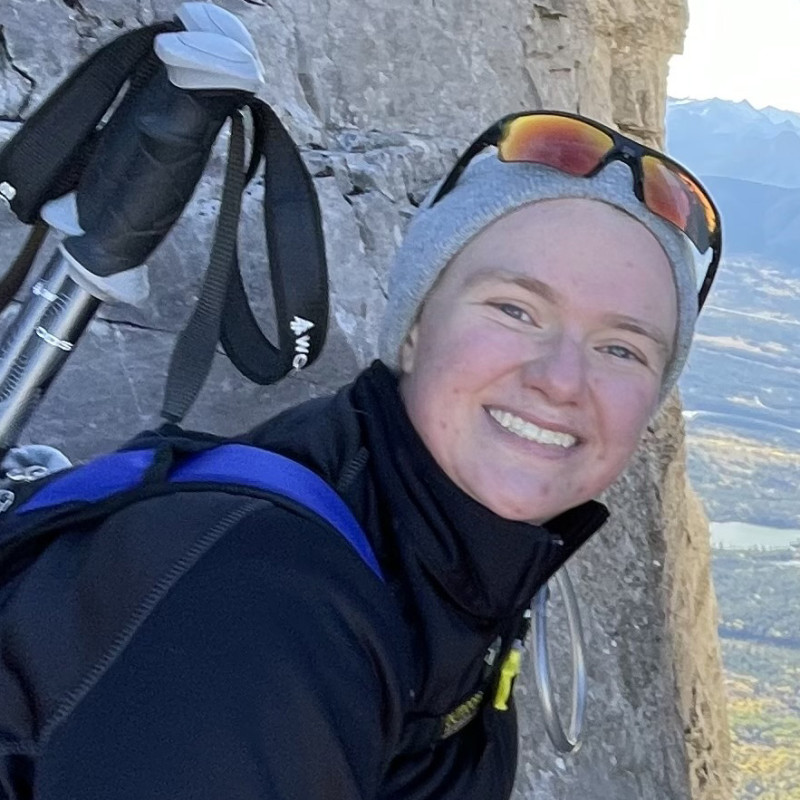
From presenting at undergraduate research conferences to participating in the National Science Foundation’s (NSF) Research Experience for Undergraduates, Wallace Tonks ’26 built an extensive research background at Russell Sage College before being named Valedictorian for the Class of 2026.
Learn more about how these experiences enriched his education and prepared him for grad school in the Q&As below.
Russell Sage College Biology graduate Wallace Tonks ’26 is now pursuing an MSc in Biology—specializing in Arctic biology—at the University of Calgary. He recently spoke with Professor of Spanish and Honors Program Director Kate Kagan about how being involved in research and presenting at conferences enriched his undergraduate experience.
You mentioned that presenting at NRHC was one of the best decisions you made at Russell Sage. What did you enjoy most about the experience, and what did you take away from it?
I loved getting to travel for the NRHC conference. We were hosted in Harrisburg, PA, and part of the conference included getting to know the city, its history, and the many murals that tell the story of Harrisburg. The conference isn’t just an opportunity for you to share your research, but also a chance to learn about the city and the people around you.
You also had a summer internship while at Sage. What was that experience like, and how did it influence your interests or your plans after graduation?
In the summer of 2024, I worked at Montana State University as a National Science Foundation undergraduate researcher. It was one of the best summers of my life. I made new friends, swam in new rivers, and climbed new mountains. I also learned difficult lessons about advocating for myself, having confidence in my research abilities, and communicating my research goals effectively. While the program was arduous, it was invaluable in preparing me for the independence of graduate research, and it reignited my interests in ecology and remote field research. Thanks to that summer, I am now happily studying Arctic biology at the University of Calgary in Alberta, Canada.
Looking back at your time at Sage, were there any courses or professors that really stood out to you or helped prepare you for what you’re doing now?
Russell Sage has excellent opportunities through the Capital Region Consortium that allows you to cross-register for courses at other colleges. This program allowed me to take multiple courses at Rensselaer Polytechnic Institute, which allowed me to expand my knowledge in Earth sciences and better prepare for the field work that I am conducting now in graduate school.
You graduated in May and are now pursuing your MSc in Biology at the University of Calgary. How has your experience at Sage helped you make the transition to graduate school?
One of the most useful opportunities I had as an undergraduate at Russell Sage was being a laboratory teaching assistant. As a teaching assistant, I learned to give lectures, answer difficult questions, and grade assignments. I use each of these skills every day in graduate school while I teach labs and lead discussions.
What advice would you give current Sage students who are thinking about getting involved in research, applying for internships, or presenting at a conference like NRHC?
Present as often as you can! You can’t get into research or internships without meeting people, asking questions, and seeking answers. Research is not complete without sharing your results, and the more you share your research, the more you can brainstorm new ways to approach an experiment.
“When I came to Russell Sage College, I did not know what I wanted to do for a career. I did, however, know what I was passionate about: making a positive impact, scientific writing, and the cold. I live for frigid winters, alpine lakes, seasonal molting, and sub-zero winds,” said Biology major Wallace Tonks. “My advisors were able to recognize that I am fueled by my love of the outdoors, my concern for the changing climate, and my fear for the future of polar environments. Their support encouraged me to explore field research opportunities in a variety of different backgrounds, with the goal of strengthening my research skills for eventual work in the freezing outdoors.”
Those field research opportunities have included a research assistantship in a microplastics lab at nearby Rensselaer Polytechnic Institute and participation in National Science Foundation-funded research at Montana State University as Tonks prepares for a career in Arctic research. Read more in the following Q&A.
Let’s start with your current research in a microplastics lab. What are you investigating?
I work under Sarah Cadieux, Ph.D., conducting undergraduate research in the Microplastics Laboratory at RPI. I started working in the lab the summer of 2025, and I am continuing my research there for part of my independent research course at Russell Sage.
Our project is looking at microplastic and microfiber pollutants in the Hudson River and its tributaries. Following the CSI for the Ocean program, our lab has been combining forensic and freshwater sampling techniques to monitor microfibers in the Hudson River watershed.
These microfibers include plastic microfibers and non-plastic anthropogenic microfibers, such as cotton. Microfibers are ubiquitous, and they shed from our clothes and other fabrics into the air and water. Continuous efforts to monitor microfiber pollutants will allow us to map trends in microplastic pollution. These patterns in pollution can then help identify possible “hotspots” and help lead the discussion on ways to mitigate microplastic contamination of our waterways.
Last year, you were part of a National Science Foundation-supported project. Tell us about that.
In summer 2024, I was funded by the National Science Foundation to attend Montana State University’s Research Experience for Undergraduates. I was part of the Socioecological Systems research experience. We took an interdisciplinary approach to assessing the health of Montana rangelands.
I worked in the Environmental Analytical Lab under Stephanie Ewing, Ph.D. I studied stable water isotopes, R programming, and field sampling techniques in mountainous, arid, and freshwater environments. I got to assist the U.S. Forest Service in conducting aspen tree surveys outside of Yellowstone National Park. I also got to help collect bison scat for the Smithsonian Institution while visiting the Fort Peck Tribes’ bison range! At the conclusion of the program, I presented my poster on “Cryogenic Vacuum Extraction as a Tool for Analyzing the Role of Soil Water in Socioecological Systems.” For this project, I helped test the lab’s new cryogenic vacuum extraction line to develop a procedure that minimized the effects of fractionation on stable water isotopes in soil samples.
What attracted you to a Russell Sage for your Biology degree?
I chose to attend Russell Sage College because of its affordability, geographic location, and size. Russell Sage’s location in the Capital District makes it a prime location for educational, career, and networking opportunities. The small size of Sage offers the opportunity to work closely alongside professors and reach out for help or guidance both inside and outside the classroom.
How did Russell Sage prepare you for your research experiences?
A large portion of research is familiarizing yourself with past studies and procedures, which means that literary analysis and digital fluency are crucial. Sage courses like Writing in Biology and Research Methods helped give me the tools to confidently use databases and digital journals for my literature reviews.
Sage’s lab courses in Microbiology, Organic Chemistry, and Cell and Molecular Biology have helped me with laboratory organization, aseptic technique, and basic procedures.
What would you like to do after you graduate?
My goal after graduation is to pursue a master’s degree in Arctic biogeochemistry and microbial ecology. This will act as a stepping stone for a Ph.D. and career in Arctic research.
How will having these research experiences on your resume help you stand out for those opportunities after you graduate?
The opportunity to work under professors in biogeochemistry, microbiology, and plant biology across laboratories, wetlands, and rangelands have taught me how to apply my research skills to a variety of disciplines. This interdisciplinary way of learning and conducting research will greatly benefit my future studies and career as a researcher and educator.
Are there classes or faculty members or other people/experiences at Sage that have been really crucial to your success in college?
My success at Sage would not have been possible without my advisors, Professor of Biology Mary Rea, Ph.D., and Assistant Professor of Biology and Health Sciences Professor John Tine, Ph.D. They have helped me get the most out of my education by providing me with resources, advice, and guidance to prepare me for graduate school.