

Information for
Helpful Links
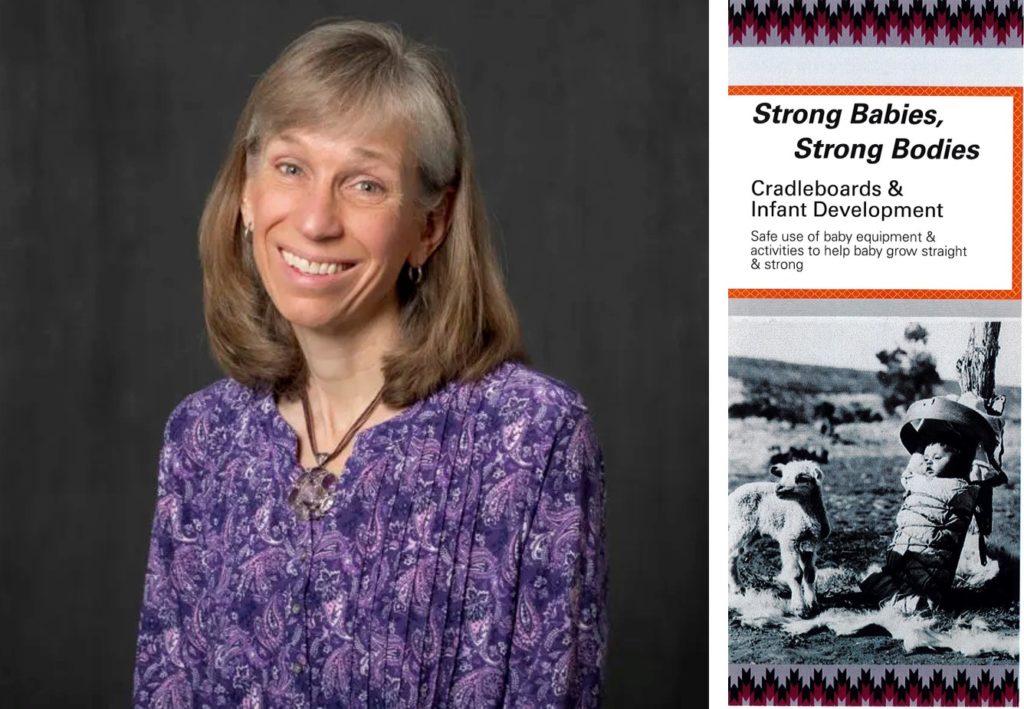
Russell Sage College Assistant Professor of Physical Therapy Cathron Donaldson, DPT, builds her pediatrics courses around the concept of family-centered care.
“The family’s experiences, the parents’ experiences, including culture and the impact of poverty, all influence a child’s development,” she said. “We need to be cognizant and understanding of culture and other influences.”
“I am constantly weaving in examples,” she added.
Before she joined Sage in 2021, Donaldson directed the Growing in Beauty Partnership Program at Northern Arizona University’s Institute for Human Development. She was part of a team that provided physical therapy, occupational therapy, and other early intervention services to children and families on the Navajo Nation. She also traveled to remote areas in Alaska to work with Alaska Native children.
Early intervention refers to a collection of health, educational, and social services provided to infants and children with disabilities and their families.
“They invited me into their homes, and I felt humbled by their trust in me,” said Donaldson of the Navajo and Native Alaskans she met, describing how homes are ideal for early intervention services because it is where children are most comfortable. “They wanted to do it so I could better help other families in their cultures.”
While working in Navajo homes, Donaldson observed traditional cradleboards and modern baby walkers were among the most commonly used pieces of baby equipment.
Cradleboards are baby carriers, made of two side-by-side wooden planks representing the Earth and sky. A swaddled baby is secured to the cradleboard with straps that represent lightning, while a wooden hoop called a rainbow protects the baby’s head.
“The Navajo have a term, ‘Walk in Beauty,’ which refers to harmony with the world and part of it is exhibiting physical strength and grace,” Donaldson said. “They believe cradleboards and baby walkers help legs and backs to be straight and strong.” Cradleboards also have deeper, spiritual significance.
Donaldson’s work led her to co-author “Understanding Navajo Parents’ Beliefs About Cradling and Early Mobility,” which appeared in Practices in Parents and Caregivers Across Cultures: Positive Development from Infancy Through Adulthood, published by Springer. The qualitative study emphasizes the need for early intervention providers, like physical therapists, to understand the values that influence Navajo parents’ decisions to use traditional cradleboards and modern baby walkers.
Donaldson then collaborated with Navajo educators on brochures that promoted safer use of cradleboards and baby walkers in concert with Navajo values, as well as suggestions for activities like floor play and tummy time that support babies’ development.
“It was an honor and a privilege to work with Navajo families and Alaskan Native families,” she said. “I don’t pretend I am an expert in their cultures, but I’m trying to make myself open and to help students understand that they need to be open.”
In addition to teaching pediatric physical therapy and motor learning in Sage’s DPT program, Donaldson guides student research in areas related to underserved populations. She and Assistant Professor Katrin Ramsey, DSc, recently mentored three students during a study of the physical effects of gender-affirming hormone therapy and its implications for physical therapists, which the students presented at the 2023 American Physical Therapy Association’s New York Conference.
She’s preparing to lead another group of graduate students in a study to learn of the impact of short-term service learning experiences.
And she’s joined a statewide project affiliated with Binghamton University, to help improve access to early intervention services in rural areas across New York.
In addition to promoting culturally-sensitive care, Donaldson wants to build a more inclusive physical therapy profession. She is pursuing a second doctoral degree and planning her dissertation.
“I am interested in finding out more about how we can include individuals with physical disabilities in PT and other health care professions so we can be more representative of the populations that we treat,” she said.