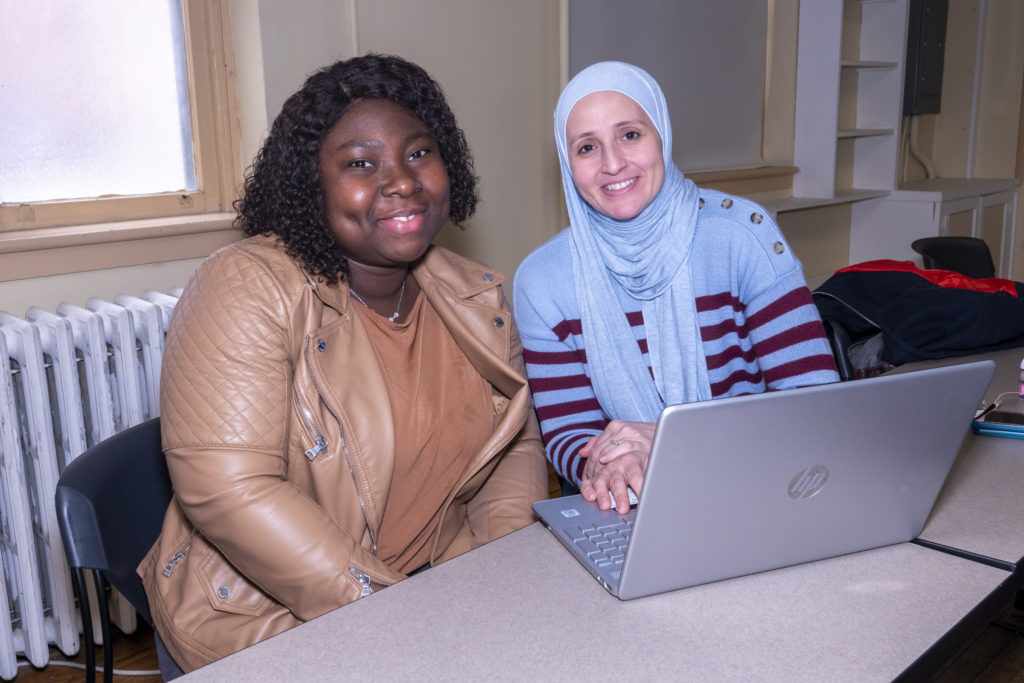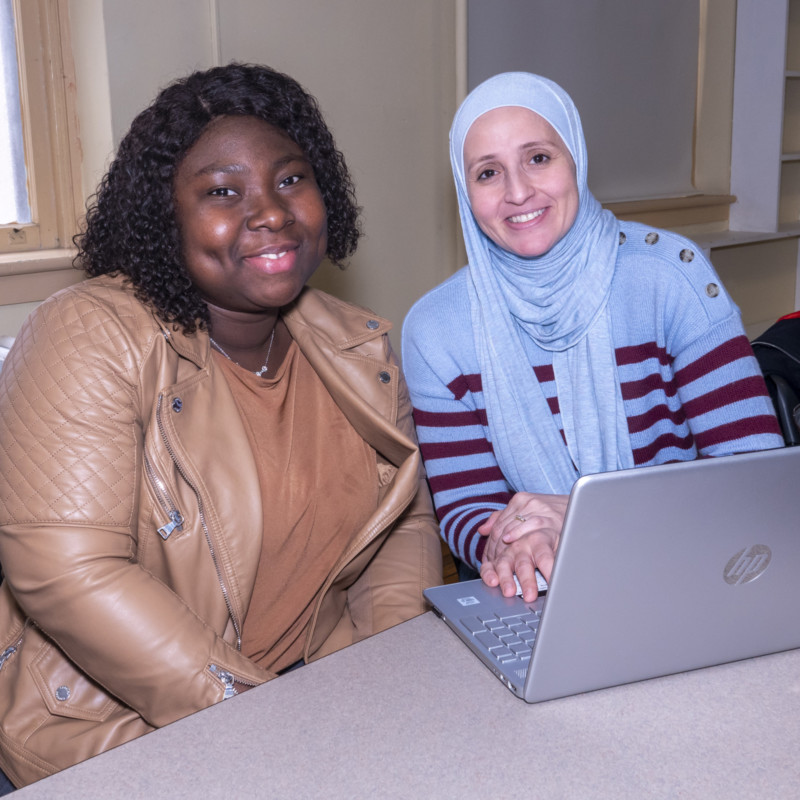

Med Nutrition Therapy class students

Complete this Master of Science in Nutrition from Anywhere

Our online program will give you critical-thinking and analytical skills, and teach you how to evaluate nutrition research and assess program effectiveness.

Specialties in our Nutrition master’s program

A Russell Sage nutrition degree means something in the field:

We are a top-three producer of nutrition degrees and certificates in New York state. We are the ONLY accredited nutrition program in New York’s greater Capital Region. Many employers look for a Sage-educated RDN above all others.

Our experts are tapped for research on issues like childhood wellness in the Capital Region.

Students engage in research that supports community wellness efforts, like a recent project to help the United Way of the Greater Capital Region’s Summer Meals Collaborative ensure it is meeting local children’s needs.

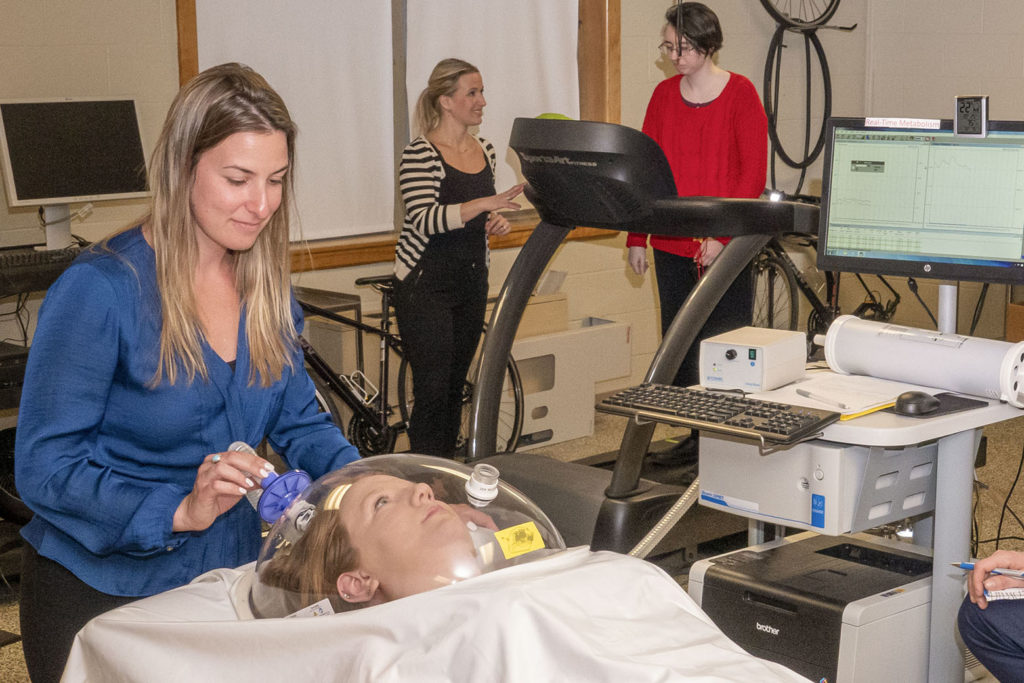
The Hannaford Nutrition and Physical Assessment Lab and the Manor Nutrition Sciences Lab are equipped with advanced research tools.

  • Online convenience: If you have an undergraduate degree in nutrition, this master’s program is fully online. Students with a bachelor’s degree in another field may have to pick up some classes in another format.
  • We still have a path to becoming an RDN: A combined master’s and Dietetic Internship is available for students who want to sit for the exam to become an RDN.

    This two-year, 45-credit course of study includes the core 24 credits from the Dietetic Internship with an additional 21 credits to complete the Applied Nutrition M.S.
  • We are a leader in population health efforts: Department-sponsored events, like our annual lecture with CDPHP, are a major source of community health information.
  • Official transcripts from all post-secondary institutions
  • Two letters of recommendation
  • A 1- to 2-page career goals essay: We want to hear your voice. Russell Sage College values authenticity, critical thinking, and personal expression. We ask that all application essays be written solely by the applicant with only ethical use of AI technology, such as tools that support but do not generate content.
  • A resume
  • An RSC graduate school application
  • Note: Students seeking the combined M.S. in Applied Nutrition/Dietetic Internship program must apply through DICAS and would start their program in the fall semester.

Best Class Ever: Nutrition and Dietetics: Farm to Family Wheels

Leah Waldron ’25
Nutrition & Dietetics, M.S.

Course Requirements

Credits and Completion

Our master’s in applied nutrition programs range from 30 to 33 credits and can be completed full time in approximately 18 months to two years part time.

  • Critical evaluation skills through analysis of research literature
  • Ability to integrate and apply what is learned to relevant and current situations
  • Strong background in health behavior theory and translation into practice
  • Planning, conducting and evaluating food and nutrition programs and interventions
  • The ability to communicate messages effectively to a wide variety of audiences
    • Hands-on experience in designing and conducting research, including:
    • Identifying research hypotheses
    • Developing surveys
    • Collecting and analyzing data
    • Interpreting results
    • Manuscript preparation

The learning experience is tailored to students’ needs and interests. Learn:

  • Research analysis and interpretation
  • Writing and communication
  • Critical thinking
  • How to evaluate the effectiveness of interventions
  • Global understanding of obesity
  • Medical nutrition therapy
  • Confidence using evidence-based guidelines in practice
  • Presentation skills at professional meetings
Personal advising, experienced faculty

Our applied nutrition master’s comes with a deep, Russell Sage-level of support from an assigned faculty advisor who works with you to ensure your success.
Your Future Career with a Master’s in Applied Nutrition

A Master of Science in Nutrition will increase your marketability and provide you with skills to interpret scientific literature, utilize evidence-based guidelines, evaluate programs and conduct research. You’ll be able to work in industry, government or clinical or community settings.

Graduates of this program are employed at Community Care Physicians, Cornell Cooperative Extension, St. Peter’s Hospital and New York State Women, Infants and Children programs.

Related Resources

Frequently Asked Questions – Master of Science in Applied Nutrition (M.S.) 

With a master’s degree in applied nutrition — which meets the graduate-level requirement and can be paired with a Dietetic Internship to fulfill the educational steps toward becoming a Registered Dietitian Nutritionist — you can pursue career opportunities with physician groups, hospitals, state assistance programs, and other community organizations. A Master of Science (MS) program in applied nutrition gives graduates a strong professional foundation in critical thinking and the analytical skills necessary to evaluate nutrition research and apply that analysis to real world problems in the community. Graduates of a master’s program go on to become nutritionists, researchers, consultants, food service directors, and even entrepreneurs in a variety of industries, including athletics, education, and the nonprofit sector.

According to the U.S. Bureau of Labor Statistics (BLS), the demand for nutritionists and dieticians is expected to grow by 6% between 2024 and 2034, which is faster than average for all careers and represents 5,000 new jobs across the country. As of 2023, New York state employs the second highest number of nutritionists and dieticians in the country, just behind California. It is among the top paying states for the career, with a median annual salary of $80,510.1 

Russell Sage’s MS in Applied Nutrition program engages students in community service and population-health research through its directed research curriculum and focus on community health engagement.  

At Sage, the research and community focus of the program work together to achieve results. For instance, applied nutrition MS students completed a research project in support of the United Way of the Greater Capital Region’s Summer Meals Collaborative, helping the organization ensure it is meeting local children’s nutritional needs. 

All MS students must complete three research methods courses, including Research Methods for the Health Sciences along with two Directed Research courses. Jamal Sanders, a graduate of the Russell Sage MS in Applied Nutrition program and a nutritionist with the New York State Department of Health, says of his time in the program, “The standout benefit for me was to undertake a yearlong research project. […] Not only did I have the chance to work on a real research project, but this has also become the focal point of my resume for research experience.”2 

Students who graduate from Sage’s 30-33 credit applied nutrition program will be well-prepared for a career that includes research and nutrition program analysis. However, a dietetic internship (DI) is required to sit for the Registered Dietitian Nutritionist (RDN) credential, which is available as part of the 45-credit program.  

The combined DI and MS program requires students to complete the core 24 credits for the Dietetic Internship and earn an additional 21 credits to complete the Applied Nutrition M.S. Three tracks are available for the program, depending on an applicant’s timeline:  

  • Accelerated track, which can be completed in four full-time semesters 
  • Traditional track, which can be completed in five full-time semesters 
  • Traditional part-time track, which can be completed in seven part-time semesters  

Sage is the only accredited nutrition program in New York’s greater Capital Region. As of 2024, all RDNs must have a master’s degree. The 45-credit Sage program allows aspiring RDNs to meet that requirement as well as earn their supervised practice hours.  

The Sage MS in Applied Nutrition program requires that applicants submit official transcripts, two letters of recommendation, career goals essays, resumes, and Russell Sage graduate school applications. Admissions are granted on a rolling basis, meaning that accepted students can begin in the fall, spring, or summer semesters.  

If you want to make your application to the MS program more competitive, you can accomplish this in a few ways. Earning a strong GPA in undergraduate science courses is a good start. In addition, it’s possible to make your application stand out by doing the following:  

  • Explain Relevant Work History: Your resume gives you a chance to explore how your work history will support your success in a master’s program. Even if your work was not directly related to nutrition or dietetics, explain how you analyzed and solved problems, collaborated with other professionals, or conducted research programs.  
  • Leadership Roles: Include professional as well as undergraduate leadership experience in clubs or other organizations. People who can demonstrate interest and experience in leadership are more likely to succeed in graduate programs.  
  • Volunteering: Be sure to include volunteer experience on your resume, as well as any shadowing of nutrition professionals. 

Research skills are a crucial element of the MS in Applied Nutrition program. In addition to the core nutrition courses, every student must complete three research methods courses, including two directed research requirements that must be completed during the final year of the MS program.  

The year-long, faculty-mentored research project includes a full spectrum of research elements, such as:  

  • Preparing a literature review 
  • Designing the methods for a research project 
  • Developing data collection tools 
  • Submitting an IRB form 
  • Collecting and analyzing data and then interpreting results 
  • Creating a research poster 
  • Preparing the final manuscript 

Research skills are foundational to understanding and building an evidence-based practice as a nutritionist, dietitian, or other public health professional. Evidence-based practice is critically important in the current nutritional landscape. According to a study in the British Journal of Nursing3, digital platforms like social media sites “facilitate the rapid spread of misinformation, often propagated by individuals without professional credentials,” which in turn “shapes public perceptions and behaviors.” In the future, educated health professionals will continue to provide a critical line of defense against this sort of misinformation in their communities.  

The MS in Applied Nutrition program is accessible and affordable for working professionals, particularly those with an existing background in nutrition. Applicants who have completed a bachelor’s degree in nutrition can complete the MS program entirely online. Applicants with a bachelor’s degree in a field other than nutrition may need to complete prerequisites on campus, but degree courses can still be completed online.  

Earning a master’s degree requires both time and financial commitment. Sage programs are designed with both flexibility and affordability in mind to ensure they are available to students who want to continue working or who have family obligations that prevent them from attending graduate school full time.  

Tuition, fees, and available financial support options vary. Graduate students may be eligible to apply for federal financial aid, scholarships, and assistantship opportunities, depending on qualifications and location. For the most current program costs, funding options, and financial aid details, visit the Admission & Aid page to explore pricing and support resources. 

Need help?
Associate Professor of Nutrition
518-244-2047

Take the Next Step

It's time to take the next step. Choose yours below.