
Counseling

Support Mental Health and Well Being

Licensed Mental Health Counselors have a master’s degree in counseling and provide evaluation, assessment, treatment and consultation services for adults and children, families and communities.

Become an LMHC

This master’s in Mental Health Counseling and Community Psychology is approved by the New York State Education Department’s Office of the Professions. Graduates are eligible to take the exam required to practice as a Licensed Mental Health Counselor in New York state.

(We offer a Community Psychology master’s for those not seeking licensure as a LMHC.)
Master’s candidates who want to work with individuals with mental health needs and criminal justice involvement may add a certificate in Forensic Mental Health.

Candidates may also apply for the Credentialed Alcohol and Substance Abuse Counselor in Training (CASAC-T) certification, administered by the New York State Office of Substance Abuse Services.

Take academic, clinical, and research classes in the behavioral sciences and build therapeutic skills under the supervision of licensed professionals. In addition to core courses, we offer courses in family counseling, psychopharmacology, and substance abuse counseling.

Hands-on experiences will build your understanding of psychological research and counseling practice and offer opportunities for professional development.

As a counseling psychology master’s candidate, you will work therapeutically with clients under the supervision of licensed, registered professionals.

Recent settings include the Capital District Psychiatric Center, Albany Medical Center Behavioral Pediatrics, and the Mid-Hudson Forensic Psychiatric Center. Our internship coordinator helps you search for placements.

You will also conduct research and may be eligible for research funding from Russell Sage’s Broughton Graduate Fellowship or Paul Search Research Award in Community Psychology, or from the American Psychological Association.

Students have presented research at the American Psychological Association’s national and regional conferences and Russell Sage College’s Graduate Research symposium.

  • Sage’s cost-per-credit is low compared to private institutions. Plus, we offer a 10% discount for employees of organizations in the Workforce Development Partnership program.
  • Our counseling master’s program is primarily an evening program, with some weekend and online courses. You can complete your degree in three to four years while you work full time.
  • Full-time faculty have Ph.D.s in counseling, clinical, or community psychology.

Mental Health Counseling vs. Social Work

Many students ask whether they should pursue becoming a Licensed Mental Health Counselor (LMHC) or Licensed Clinical Social Worker (LCSW). 

While your career path is a personal choice, we wanted to help you by breaking down the difference in licensing requirements in New York state, so you can understand your educational journey, licensing requirements, and scope of practice for each route.

  • Official transcripts from all post-secondary institutions attended
  • Applicants should have a minimum undergraduate GPA of 3.0
  • Applicants should have completed undergraduate courses in social science statistics, history and systems of psychology, and three additional courses in behavioral sciences
  • Two letters of recommendation
  • A 1- to 2-page career goals essay: We want to hear your voice. Russell Sage College values authenticity, critical thinking, and personal expression. We ask that all application essays be written solely by the applicant with only ethical use of AI technology, such as tools that support but do not generate content.
  • Current resume
  • GRE scores are not required

Course Requirements

Credits and Completion

Our master’s in Mental Health Counseling and Community Psychology program is 60 credits and can be completed full time in approximately three years.  The program has been registered with New York State Education Department as meeting the educational qualifications leading to licensure as a Mental Health Counselor in New York State.

Students enrolled in the Mental Health Counseling and Community Psychology Masters Program may also elect to pursue a Certificate in Forensic Mental Health.

This master’s degree in Counseling and Community Psychology prepares students for work as Licensed Mental Health Counselors in accordance with the best practices in education and training recognized by the Master’s in Psychology and Counseling Accreditation Council. Graduates have a foundation in ethical practices, understand intersectionality of multiple identities and respect multicultural perspectives.

The M.A. in Counseling and Community Psychology Program is accredited by the
Masters in Psychology and Counseling Accreditation Council (MPCAC) for the period of November 2020 through November 2028.

Enrollment, Retention, Graduation & Outcomes
Academic Year of Entry2024-2025
Number of applications90
Number accepted39
%43.3%
Number Matriculated24
%61.5%
Retained into 2nd year20
%83.3%
Graduated in 3 years (full time)15
%50.0%
Graduated in 4 years (part time)5
%17%
*Total Graduated20
*Total %Percent67.0%
*Still In Progress (2022 start)10
%33.0%
Total number of Students Enrolled84
Admissions information
*Mean undergrad GPA3.33
Mean GRE VerbalNot applicable
Mean GRE QuantitativeNot applicable
Mean GRE WritingNot applicable
Mean MATNot applicable
Program Outcomes
*Obtained state licensure (2021-2023 grads)17
%35%
Enrolled in doctoral program2
%4%
Passage of CPCENot applicable

“Students with a master’s degree in counseling walk out the door with jobs. There’s such a need for counselors that they have jobs immediately.”

Gayle Morse, Ph.D., Professor
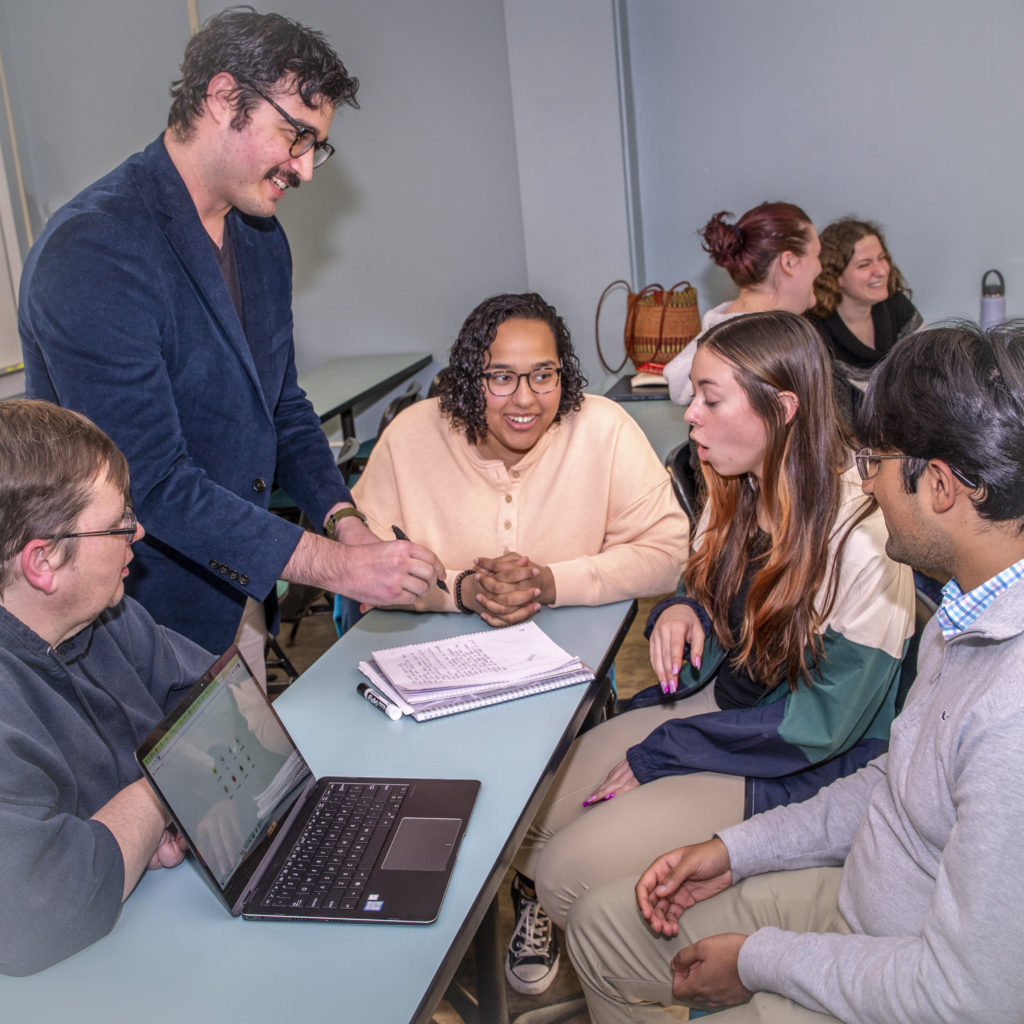
Group of students gathered around a professor

Your Career with a Master’s in Counseling

Graduates of Sage’s Mental Health Counseling and Community Psychology program become Licensed Mental Health Counselors and enter private and group practices or join state and county agencies, health care systems, universities, school districts, human service agencies and more.

Frequently Asked Questions – Master of Mental Health Counseling and Community Psychology 

Employment for mental health counselors is projected to grow 18% from 2022 to 2032, faster than the average for all occupations. This growth reflects rising awareness of mental health needs, increasing demand for addiction and substance use treatment, and expanded insurance coverage for counseling services. In New York’s Capital Region, hospitals, community agencies, schools, and private practices are consistently seeking licensed professionals to meet client needs. Graduates of Russell Sage College’s Master of Mental Health Counseling & Community Psychology enter the field prepared to serve diverse populations in both clinical and community settings. 

The program’s unique focus on both mental health counseling and community psychology positions graduates for roles not only in direct care, but also in program development, advocacy, and community wellness initiatives. This dual perspective ensures that alumni can address individual client needs while contributing to broader systems of care across the Capital Region and beyond.  

Russell Sage prepares students for and supervised hours and eventual LMHC licensure in New York State because it is an approved program within the New York State Education Department’s (NYSED) Office of the Professions. To qualify for LMHC licensure, a master’s degree from an approved program such as Sage’s Master of Mental Health Counseling & Community Psychology is required.  

A total of 3,000 supervised clinical hours is also a requirement for LMHC licensure. However, NYSED standards indicate that supervised hours must be completed after the completion of an approved master’s degree.1 Students enrolled in the Sage master’s program will be well-prepared to complete these requisite supervised hours by virtue of the field placements required as part of the degree. A dedicated internship coordinator at Sage guides master’s students through the process of finding an internship site that aligns with their goals. Master’s students in both online and in-person master’s programs will complete a counseling practicum in addition to two counseling internships.  

Nationally, licensed mental health counselors earn a median annual salary of about $53,000, though earnings vary by setting, region, and experience. In New York, salaries are often higher, with LMHCs in hospitals, government agencies, and healthcare systems earning above national averages. Counselors in private practice have additional potential for income growth, depending on caseload and specialization. 

In the Capital Region, compensation is also influenced by employer type. Community mental health agencies and schools typically provide stable salaries and comprehensive benefits, while hospital and healthcare system positions may offer higher pay along with opportunities for advancement. Loan-repayment programs and tuition assistance are sometimes available through agencies serving underserved populations, adding further value for graduates of Sage’s program. 

Mental health counselors work with individuals, couples, families and groups facing a range of challenges, including addictions, depression, anxiety, grief, trauma, and stress. They evaluate clients’ mental and physical health, assess risk factors and develop individualized treatment plans that may include cognitive‑behavioral therapy, motivational interviewing, or mindfulness strategies. Counselors lead individual and group therapy sessions, teach coping skills and monitor progress toward treatment goals. They also coordinate care by referring clients to physicians, support groups or social services and preparing them for transitions such as discharge from inpatient programs.  
Graduates are prepared to work in a variety of settings including schools, community agencies, hospitals, rehabilitation programs, and private practice. The curriculum also integrates externship and internship experiences, giving students supervised opportunities to apply classroom knowledge in real-world contexts. This combination of theory and practice ensures that Sage graduates enter the profession with confidence and competence. 

The LMHC program at Sage requires three field placement courses as part of the Master of Mental Health Counseling and Community Psychology program:  

  • Counseling Practicum 
  • Internship in Counseling I 
  • Internship in Counseling II 

These three courses not only provide mental health counseling practicum hours as required for NYSED approved and accredited programs, but they also offer Sage master’s students the opportunity to work with a variety of clients from diverse backgrounds under the supervision of experienced practitioners and mentors. The Sage internship coordinator helps students to identify and obtain internship placements that meet their goals and are convenient and accessible for their lives.  

Need help?
Chair and In-Person Program Director, Associate Professor of Psychology
518-244-2223

Take the Next Step

It's time to take the next step. Choose yours below.