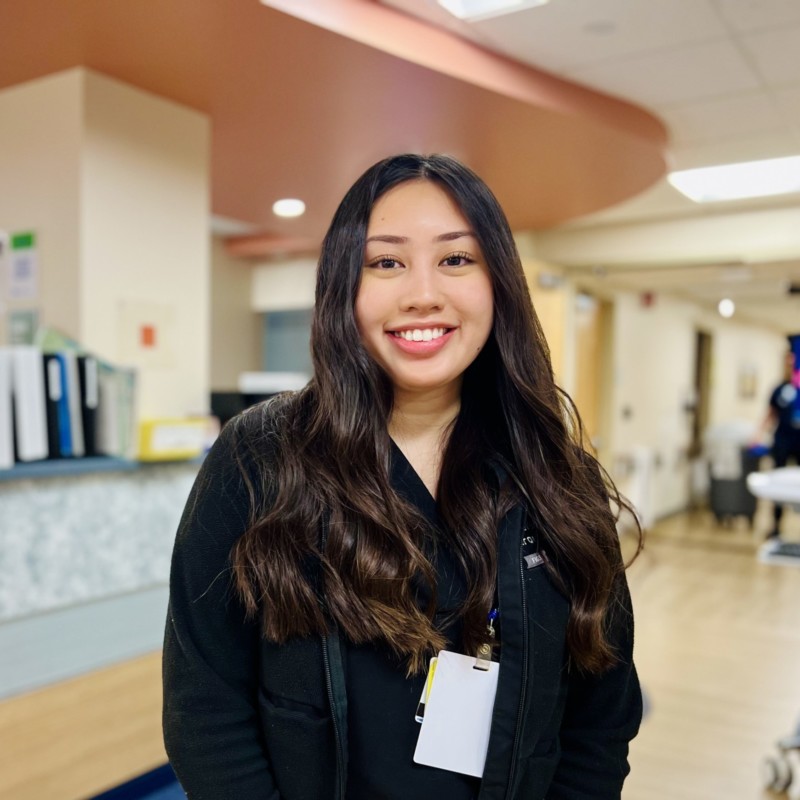

Why the Doctor of Nursing Practice at Russell Sage?

The changing demands of this nation’s complex healthcare environment require the highest level of scientific knowledge and practice expertise to assure quality outcomes. The DNP degree can significantly contribute to professional growth, leadership competencies, and expanded career opportunities.

Specialties in our Doctor of Nursing Practice program

The Doctor of Nursing Practice (DNP) degree is the highest academic preparation for nursing practice and obtaining a DNP may, in the near future, become a prerequisite for board certification and licensure for APRNs.
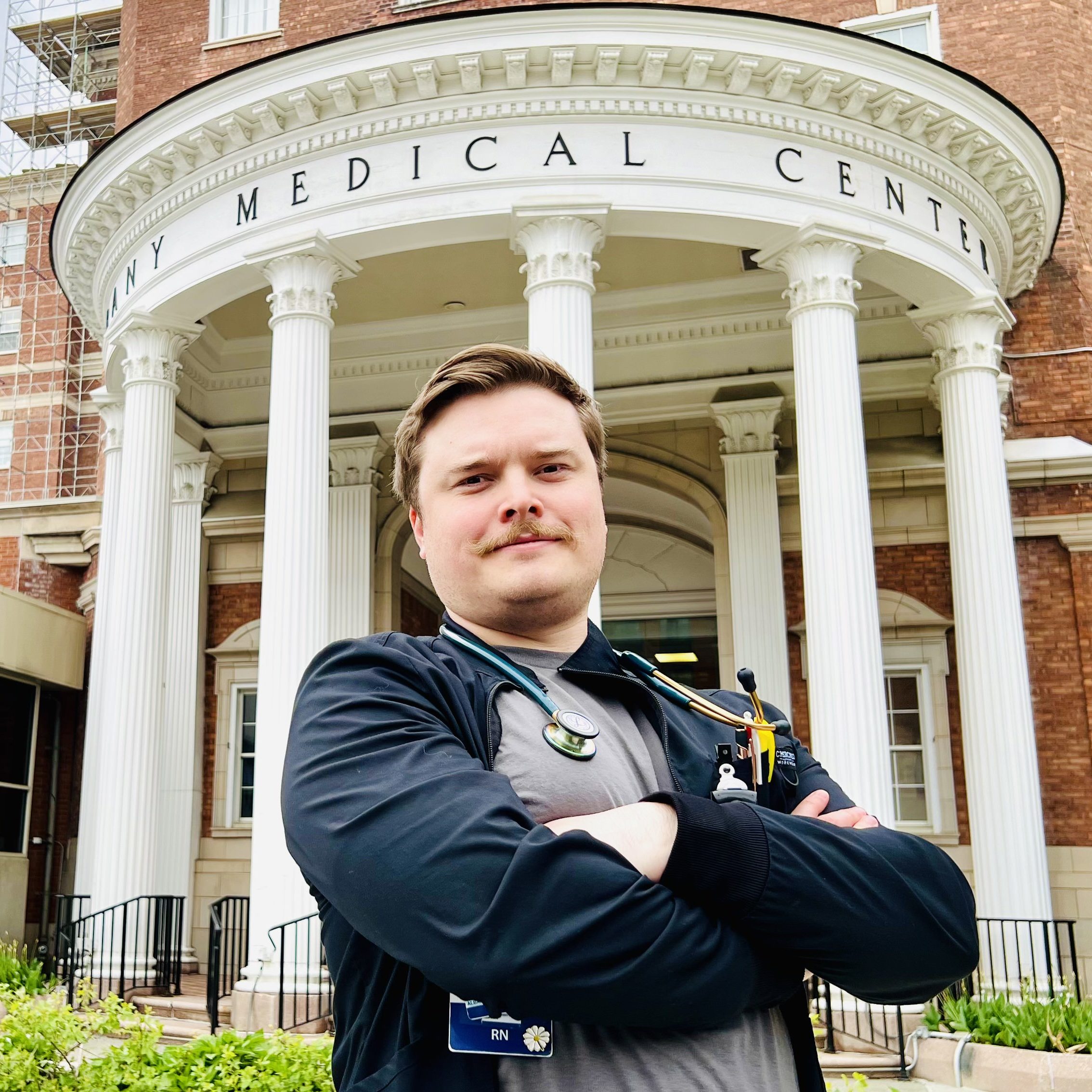
With the exception of in-person clinical practice hours with a preceptor and 4 to 6 health assessment labs at the Masters level, the program considers the schedule of the working nurse by offering coursework online in a convenient synchronous format with faculty who are expert nurse practitioners and researchers.

Graduates have refined critical thinking skills and clinical knowledge to translate research into practice, evaluate outcomes using information systems and fiscal analysis and provide clinical leadership across healthcare settings. The DNP degree can significantly contribute to professional growth, leadership competencies, and expanded career opportunities.

Address social determinants of health with the goal of increasing diversity, equity, and inclusion across healthcare settings, including the formulation of policy, advocacy, and social justice initiatives that lead to improved health outcomes and the implementation of innovative quality improvement processes.

Create and evaluate healthy work environments and learn to utilize new sustainable care delivery models.

Collaborate in innovative interprofessional clinical practice and research teams and develop stronger systems leadership skills.

Two pathways: The path that RNs in this program take is determined by the degree they already hold.

  • B.S. in Nursing to DNP: This 72-credit program is an entry-level pathway for RNs with a current New York state license and a Bachelor of Science in Nursing, which allows them to earn a doctorate without a master’s degree needed in between. The field experiences range from 1,150 to 1,200 clinically precepted, faculty-supervised hours in the students’ population focus and specialty track. Students can start this program in the fall semester only. Including summers, students can complete this program in 4 1/2 years if part time or 5 to 5 1/2 years full time.
  • M.S.-Prepared NP to DNP: This 24-credit program is for master’s prepared Nurse Practitioners who wish to achieve a doctoral degree and are admitted with advanced standing after a gap analysis is conducted to determine if additional credits are needed. In addition to didactic courses, 500 hours of clinical must be completed. Students can start this program in the spring semester only. Students can complete this program in two years on a part-time basis.
  • Be a Registered Nurse with a current unencumbered license (and have an NP license for the M.S. to DNP program)
  • Meet Russell Sage graduate admission requirements, including having achieved a 3.0 grade-point average or higher in previous academic programs
  • Complete an online Russell Sage College graduate application
  • Provide transcripts from all post-secondary institutions attended
  • Submit a 2- to 3-page personal statement that includes reason the DNP is being sought, career goals, scholarly project idea and how the applicant will balance the demands of doctoral education with other life responsibilities. We want to hear your voice. Russell Sage College values authenticity, critical thinking, and personal expression. We ask that all application essays be written solely by the applicant with only ethical use of AI technology, such as tools that support but do not generate content.
  • Provide a current resume
  • Submit three letters of recommendation, with one letter or more from a doctorally prepared nurse. One should be from someone in academia, one from a supervisor, and one from an advanced practice RN who can speak to the applicants breadth and depth of experience and potential as a doctorally prepared nurse. 
  • Successful completion of a descriptive statistics course within 5 years.
  • Have one year or 2,000 hours experience as a Registered Nurse

Dear Interested Parties,

Russell Sage College in Troy, New York will host an accreditation visit by the Commission on Collegiate Nursing Education (CCNE) on February 4th to 6th, 2026.  The purpose of the visit is to seek nursing accreditation of the Doctor of Nursing Practice (DNP) Program. 

In accordance with the Commission on Collegiate Nursing Education (CCNE) accreditation procedures, interested parties may submit written comments concerning a program’s qualifications for accreditation. Comments must be received by CCNE no later than Wednesday December 24th, 2025.  Only signed comments are accepted by CCNE. 

CCNE shares their party comments with members of the evaluation team prior to the visit, but at no time during the review process are these comments shared with the program. During its review of the program, the evaluation team considers third-party comments that relate to the accreditation standards.

If you would like to submit a third-party comment for the programs currently under review, please submit it to thirdpartycomments@ccneaccreditation.org.

Or, if you prefer, please mail comments to:

Commission on Collegiate Nursing Education
Attn: Third-Party Comments
655 K Street, NW, Suite 750
Washington, DC 20001If you have any questions about this process, please contact the CCNE staff at (202) 887-6791 ext. 268.

Thank you for your time. 

Sincerely, 

Glenda B. Kelman PhD, RN, ACNP-BC
Chair & Professor, Nursing 
Russell Sage College 

Clinical Partners

Students have the opportunity to complete the required clinical practicums in their region or with tertiary, comprehensive, and community hospitals, primary care clinics, and inpatient and outpatient psychiatric settings based on course and track requirements.  

Industry Need

The U.S. Bureau of Labor Statistics estimates demand for nurse practitioners (as well as nurse anesthetists, nurse midwives) is expected to grow by 35% nationally between 2024 and 2034, with NPs making a median annual salary of $132,050.

About 32,700 openings for nurse anesthetists, nurse midwives, and nurse practitioners are projected each year, on average, over the decade. Many of those openings are expected to result from the need to replace workers who transfer to different occupations or exit the labor force, such as to retire.

In New York state, the Center for Health Workforce Studies most recent data projected a nearly 56% increase in available NP positions between 2020 and 2023, with the need growing by about 52% in just the Capital Region.

Alumni of our graduate Nursing programs have career opportunities as nurse practitioners, nurse educators, nurse executive-administrators and clinical nurse specialists. According to the Bureau of Labor Statistics Occupational Outlook Handbook for Nurse Practitioners.

$132,050

the median annual wage for nurse practitioners.

Frequently Asked Questions – Doctor of Nursing Practice (D.N.P)

A. While both a DNP and an MSN currently satisfy educational requirements for a nurse practitioner, a DNP may in the near future become a prerequisite for board certification and licensure for all Advanced Practice Registered Nurse (APRN) roles, including nurse practitioner.

According to the American Association of Colleges of Nursing (AACN), the DNP “is designed for those in clinical practice and areas that support clinical practice — administration, organizational management, leadership, and policy.” A DNP program at Russell Sage will typically take two to five years to complete, depending on the credentials of the applicant. On the other hand, an MSN program typically takes between two and three years to complete. Depending on whether they enter the program with a bachelor’s degree or a master’s degree, DNP students will need to complete between 500 and 1,200 supervised field experiences or clinical hours to earn their DNP degrees.

Working nurses can complete some DNP programs, including the Russell Sage College DNP degree plan, entirely online with in-person clinical labs and clinical practicum opportunities.

A. The BS-to-DNP program at Sage requires 72 credits and is available to RNs who have a current New York state license and a bachelor’s degree in nursing. This program allows well-prepared RNs to skip a master’s program and complete their DNP in 4 1/2 to 5 1/2 years. The M.S.-Prepared NP to DNP track allows nurse practitioners with a master’s in nursing, who are admitted with advanced standing, to complete their DNP with 24 additional credits in about two years.

Sage’s online DNP for working nurses supports students who do not want to put their nursing career on hold to continue their education. Sage’s flexible format includes online synchronous course delivery from dedicated and experienced nursing faculty, coupled with in-person clinical labs and practicum placements.

A. The job outlook for nurse practitioners in the U.S. is extremely good, and earning a DNP degree is an excellent option for registered nurses who want to advance their careers and earn NP credentials.

According to the U.S. Bureau of Labor Statistics (BLS), the demand for nurse anesthetists, nurse midwives, and nurse practitioners is expected to increase by 35% between 2024 and 2034, which is much faster than the average for all professions. This anticipated increase in demand will lead to an additional 134,000 jobs for qualified nurses around the country.

An MSN degree is the minimum education requirement to become a nurse practitioner. However, nursing organizations such as the AACN and the National Organization of Nurse Practitioner Faculties (NONPF) are advocating for an update to NP credential requirements that includes a minimum of earning a doctoral-level education. Nurses who choose to earn a DNP now are setting themselves up for continued licensure at an advanced level.

Additionally, nurses who earn a DNP may have increased opportunities for leadership positions, both in clinical and administrative areas. A recent study from the National Institutes of Health (NIH) indicated that doctoral-level studies for nurses can “strengthen nurses’ professional values by focusing on the development of critically important professional attributes.”

A. The DNP program promotes leadership and equity in healthcare by educating nurses beyond clinical care. This includes incorporating advanced coursework as well as practical experience in policy analysis, advocacy, and social justice initiatives.

The Sage DNP program relies on a curriculum that focuses on developing leadership skills for advanced nurses and addressing the underlying social determinants of health, including poverty and healthcare access. Graduates of the Sage DNP program learn how to create healthy work environments as nursing leaders in addition to learning how to collaborate with other clinicians and research teams. This helps strengthen their leadership skills within the healthcare system.

A. Success in Sage’s DNP program is predicated on experience as an RN as well as a sustained interest in furthering one’s nursing education and pursuing scholarly work. Applicants to the DNP program must have at least one year or 2,000 hours of registered nursing experience, a current and unencumbered nursing license, and have demonstrated academic competence with a suitable GPA during undergraduate studies.

According to findings from the AACN, DNP graduates gain skills in “the areas of leadership, evidence-based practice, critical thinking, and quality improvement,” meaning an interest in these areas, alongside the policy, economics, and business side of nursing are all indicators of future success in a DNP program. [1] In the same study, DNP graduates noted that “the biggest barrier they faced was balancing personal life and coursework.” Students who are successful in maintaining balance and prioritizing their goals are likely to find the most success in a DNP program.

A. DNP students can choose from supervised clinical experiences that align with their career goals at community hospitals, primary care clinics, and inpatient and outpatient psychiatric settings. Clinical experience is crucial to doctoral training for nurses. Based on hands-on opportunities to practice clinical leadership, DNP clinical experiences augment the coursework of the DNP degree program.

According to the Commission on Collegiate Nursing Education (CCNE), clinical experiences are “planned learning activities in nursing practice that allow students to understand, perform, and refine professional competencies at the appropriate program level.” For CCNE-accredited DNP programs, all students must complete a minimum of 1,000 post-baccalaureate hours of clinical experience.

Thanks to the school’s excellent connections in the local healthcare community in Albany and the surrounding areas, Sage offers unmatched opportunities for DNP students to learn and work in Capital Region hospitals and clinics.

Need help?
Professor and Chair
518-244-2001

Take the Next Step

It's time to take the next step. Choose yours below.