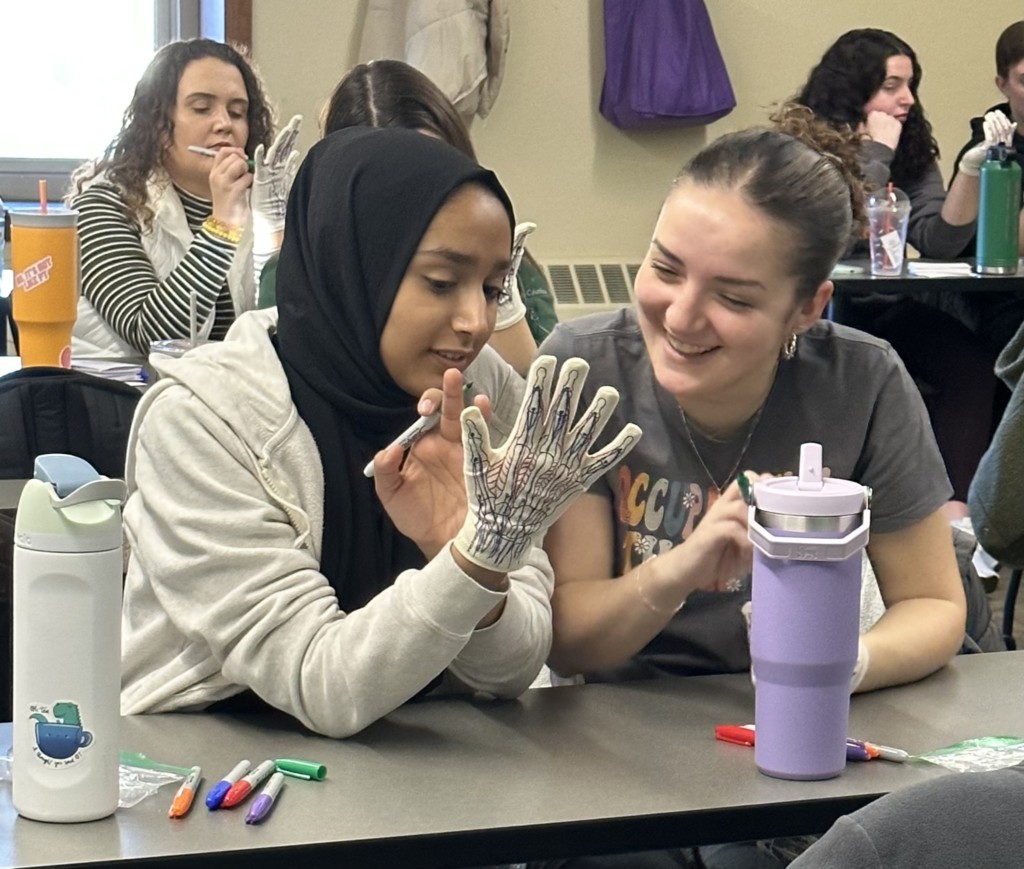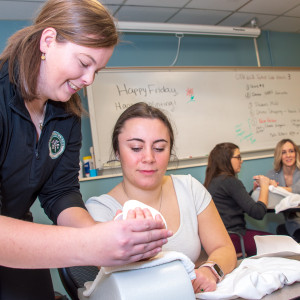

Occupational Therapy Hand Classroom Lab

Help people. Work in a variety of settings.

With a master’s in Occupational Therapy, you’ll help individuals who are recovering from an illness or an injury to return to activities that are important to them. Occupational therapists work with people of all ages, from infants to the elderly, in patients’ homes, hospitals, rehabilitation centers, nursing homes, schools, private practice and community agencies.

Why earn your hybrid MSOT at Sage?

  • 24-month program:
    Earn your hybrid MSOT degree in 24 months on a full-time schedule.
  • Substantial fieldwork experience:
    Benefit from a curriculum that places emphasis on Level-I and Level-II fieldwork.
  •  Low learner-to-faculty ratio:
    Join a program that ensures faculty can spend significant time getting to know you on a personal and professional level.

Students with a bachelor’s degree who meet the prerequisite requirements for our MSOT program should submit an RSC graduate school application and supporting materials by February 1. Find complete MSOT admission requirements and application instructions.

  • Official transcripts from all post-secondary institutions attended
  • Two letters of recommendation
  • A 1- to 2-page career goals essay: We want to hear your voice. Russell Sage College values authenticity, critical thinking, and personal expression. We ask that all application essays be written solely by the applicant with only ethical use of AI technology, such as tools that support but do not generate content.
  • Complete a recorded Zoom interview
  • A current resume
  • Documentation of at least 20 hours of clinical observation under the supervision of a licensed occupational therapist
  • Academic Standards Form
  • Prerequisite Form
  • GRE scores are not required

We have agreements with several undergraduate colleges, to offer preferred acceptance to qualified students who wish to pursue an MSOT at Sage. Please review our MSOT articulation agreements with partner colleges to learn more about MSOT preferred

Course Requirements

Credits and Completion

Students can complete the 72-credit program in just two years, including a research project and six months of full-time fieldwork. 

Russell Sage College’s Occupational Therapy program encourages students to be self-directed and engaged actively in their learning. The program provides opportunities for reflective practice and critical inquiry with vibrant problem solving. We emphasize experiential learning that builds occupation-based clinical reasoning practices explicitly linking the person, environment and occupation. Our graduates will occupy diverse workforce roles and contribute to the health and well-being of individuals, populations and society.

The Russell Sage College Master of Science in Occupational Therapy program is accredited by the Accreditation Council for Occupational Therapy Education (ACOTE) of the American Occupational Therapy Association (AOTA), located at 7501 Wisconsin Avenue, Suite 510E Bethesda, MD 20814. ACOTE’s telephone number is 301-652-6611; its web address is www.acoteonline.org; and its email address is accred@aota.org. The most recent reaccreditation was granted in December 2016. Graduates of the program will be eligible to sit for the national certification examination for the occupational therapist administered by the National Board for Certification in Occupational Therapy (NBCOT). After successful completion of this exam, the individual will be an Occupational Therapist, Registered (OTR). In addition, all states require licensure in order to practice; however, state licenses are usually based on the results of the NBCOT Certification Examination. Note that a felony conviction may affect a graduate’s ability to sit for the NBCOT certification examination or attain state licensure.

Program results from the National Board for Certification in Occupational Therapy (NBCOT) are online at  https://www.nbcot.org/Educators-Folder/SchoolPerformance

Graduation Rate

For the 3 most recent graduating cohorts (2023-2025), 74 students (89%) progressed to graduation within the typical program timeframe. While the majority of students enroll in the program full time, some choose a part-time track. Additionally, some students change to part-time after starting full-time. Some who began in the MSOT Program moved to the OTD Program, reducing the number of “students entering.”

Graduation YearStudents EnteringStudents who withdrew, or did
not graduate with the entering
cohort, for reasons other than
academic performance
Students GraduatingGraduation Rate
202534*03191%
202423*21991%
202328*02485%
Total85*27489%
* Includes students who entered or transitioned to part-time status. Graduation rates are calculated only for students who completed the program full-time; some part-time students remain enrolled and are progressing toward degree completion.

The occupational therapy curriculum emphasizes the person, environment and occupation relationship and incorporates an experiential approach that focuses on students engaging as active learners. Foundation and upper level clinical courses promote an understanding of the dynamic relationship between health, well-being and occupational engagement for a person’s ability to participate in valued life activities and roles. Students are immersed in learning opportunities to both promote clinical reasoning skills and develop a systemic view of health and service delivery systems.

Russell Sage College’s 72-credit master’s program in Occupational Therapy includes classes, research experiences and field placements centered around the foundations of occupational therapy; therapeutic evaluations and interventions; and professional identity and responsibility. The program prepares students for the certification exam administered by the National Board for Certification in Occupational Therapy (NBCOT), which leads to national certification and eligibility for state licensure as an occupational therapist.

Personal advising, experienced faculty

Our occupational therapy master’s comes with a deep, Russell Sage-level of support from an assigned faculty advisor who works with you to ensure your success.
The Sage difference

The occupational therapy master’s hybrid (MSOT) program includes mandatory courses and fieldwork that sets it apart from other occupational therapy programs, including: 

  • An emphasis on Level-I and Level-II fieldwork 
  • Two types of placements for Level-II fieldwork 
  • Physical rehab (with four physical rehab courses)
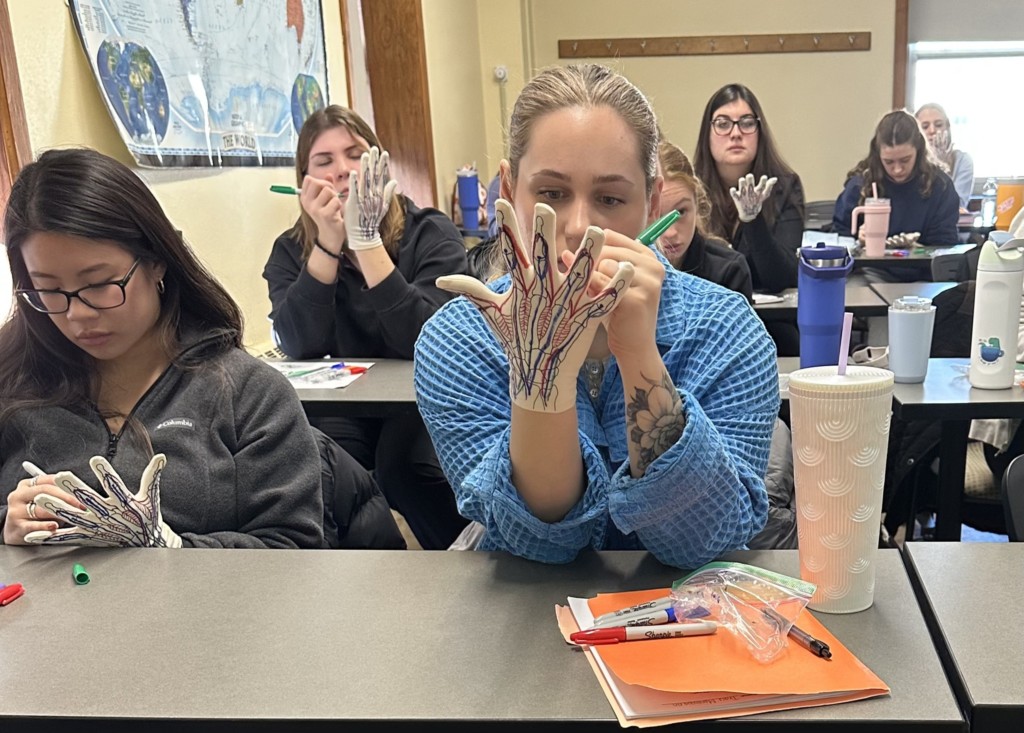
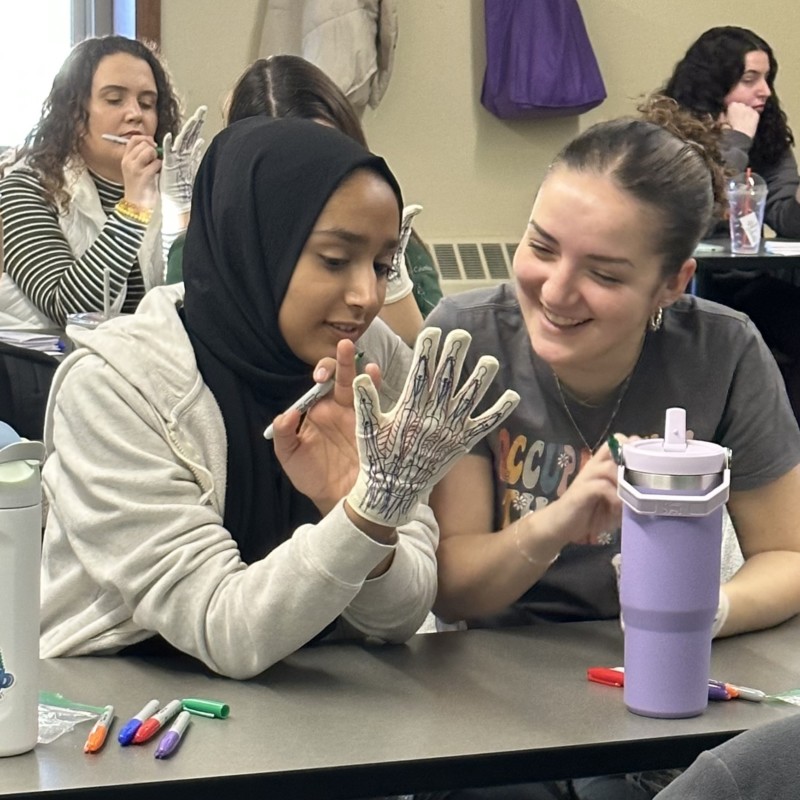
  • A course in upper extremities (shoulders, arms, and hands), which is not typically included in similar programs at other institutions 
  • Mental health as integral to all fieldwork experiences

These mandatory courses and fieldwork experiences will help you emerge as a well-rounded occupational therapist who can work in a variety of settings. 

Sage graduates go on to serve in hospitals, rehabilitation centers, nursing homes, schools, private practice and community agencies across New York state and around the country. That’s the Sage difference. 


Learning Experience

Fieldwork

You’ll complete five fieldwork experiences in or near your community. During these experiences, you will help real patients develop the dexterity they need to perform everyday tasks. These fieldwork experiences are organized by levels, as follows: 

  • Level-I: Community mental health (psychosocial)
  • Level-I: Physical rehab 
  • Level-I: Pediatric settings 
  • Level-II: Pediatrics, physical rehab, psychosocial, adults with intellectual disabilities, or community*
  • Level-II: Pediatrics, physical rehab, psychosocial, adults with intellectual disabilities, or community*

*Learners are required to complete ONE Level-II experience in physical rehab.

On-campus immersions

You’ll complete four lab immersions on the Russell Sage College campus. During these immersions, you’ll engage in case-based discussions and participate in problem-based learning activities to gain proficiency in a related topic. 

Topics you’ll explore include early intervention settings, occupational engagement in adulthood, foundations of physical rehabilitation, and more. 

Need help?
Contact us for questions about our MSOT and OTD programs.
518-244-2266

Take the Next Step

It's time to take the next step. Choose yours below.